Identify the system as clearly as you can.
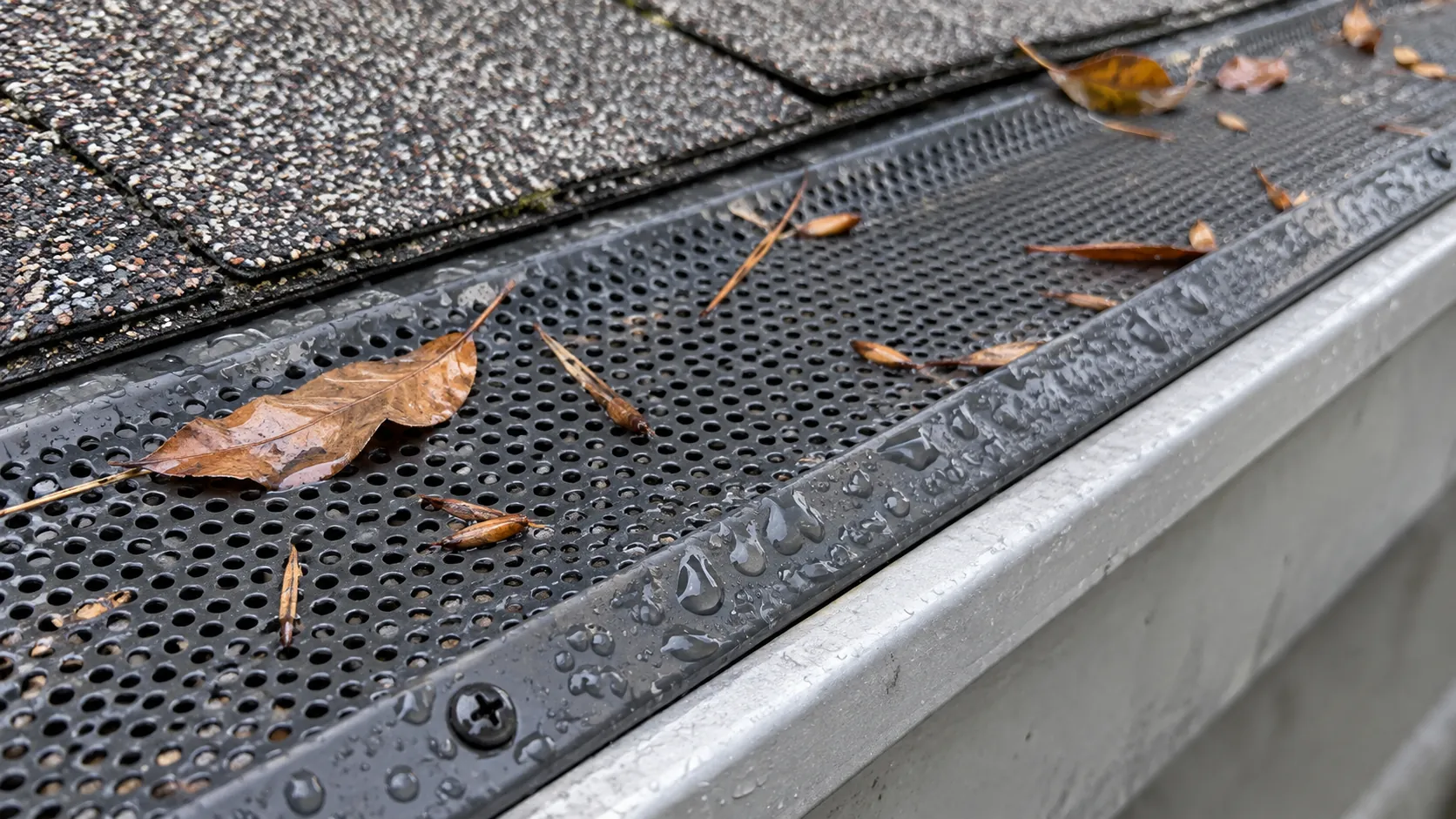
A product name or installation record is useful, but clear photos can still help when those details are missing. Show the edge of the roof, the visible guard surface, corners, and any accessible view of the attachment. Describe whether the guard is a screen, a cover, or another design without removing anything just to find out. Its construction and condition can affect the proposed cleaning access. Existing product guidance or warranty information should be considered before any removal or alteration is agreed as part of the work.
Gather product details without dismantling anything
Look for an invoice, installation note, product name, or old photograph that identifies the guard. If nothing is available, describe what is visible from the ground and say that the design is unknown. An uncertain description is more useful than guessing how the system is fitted or removing parts to investigate.
Describe what you are seeing during rain.
Leaves resting on a guard, debris at a corner, water spilling over an edge, and a downspout with little visible flow describe different concerns. Note the location and when you noticed it. Ground-level photos or a short description can help establish where a closer assessment is needed. Overflow alone does not prove that the gutter channel is blocked, and cleaning does not correct every cause of poor drainage. The scope should separate accessible debris removal from faults, concealed obstructions, or repairs that need another assessment.
Describe the observation precisely
Separate leaves lying on top of a guard from water spilling at a corner or running behind the gutter. Record the affected side and the conditions you remember. This gives the assessor a starting point while avoiding a diagnosis that a photograph or a single rain event cannot establish.
Make removal and refitting explicit.
A quote should state whether the guards stay in place, whether any sections can be removed, and who is responsible for refitting them. These tasks should not be assumed to come with an ordinary gutter clean. Difficult access, damaged components, fastenings, or product restrictions may limit what can reasonably be included. If a system cannot be accessed without work outside the agreed scope, that needs discussion before scheduling. Cleaning, guard replacement, gutter repairs, and changes to underground drainage are different jobs even when they relate to the same overflow concern.
Check who handles the guard sections
Before scheduling, ask whether any guard sections will be opened, removed, or left in place. Confirm who handles refitting and what happens if a component is already damaged. Keep product restrictions and replacement parts distinct from the cleaning task so the written agreement describes what can actually be completed.