Record the location and the pattern.
Note which side of the house is affected and whether the issue appears at a corner, a long run, a downspout entry, or the outlet near ground level. If you can observe it safely from the ground, describe what happens during rain without going out in hazardous conditions. A photo taken afterward can show remaining debris or the location. These observations are more helpful than simply writing blocked gutter, because they let the assessment focus on the part of the system that is actually causing concern.
Make a simple location record
Label a wide photo with ordinary descriptions such as front left corner, patio side, or outlet beside the garage. Add when you noticed the issue and whether it happens repeatedly. A clear location record helps the next conversation focus on the same part of the system without requiring a roof inspection.
Keep several possible explanations in view.
Visible debris can reduce room for water, but overflow may also relate to the gutter’s condition, alignment, a downspout problem, or drainage beyond the visible outlet. A cleaning service should not promise to solve all of these with debris removal. Tell us about previous repairs, fitted guards, disconnected sections, and anything you already know about the drainage route. The assessment can then distinguish accessible cleaning work from faults or concealed areas that need another specialist or a separate scope.
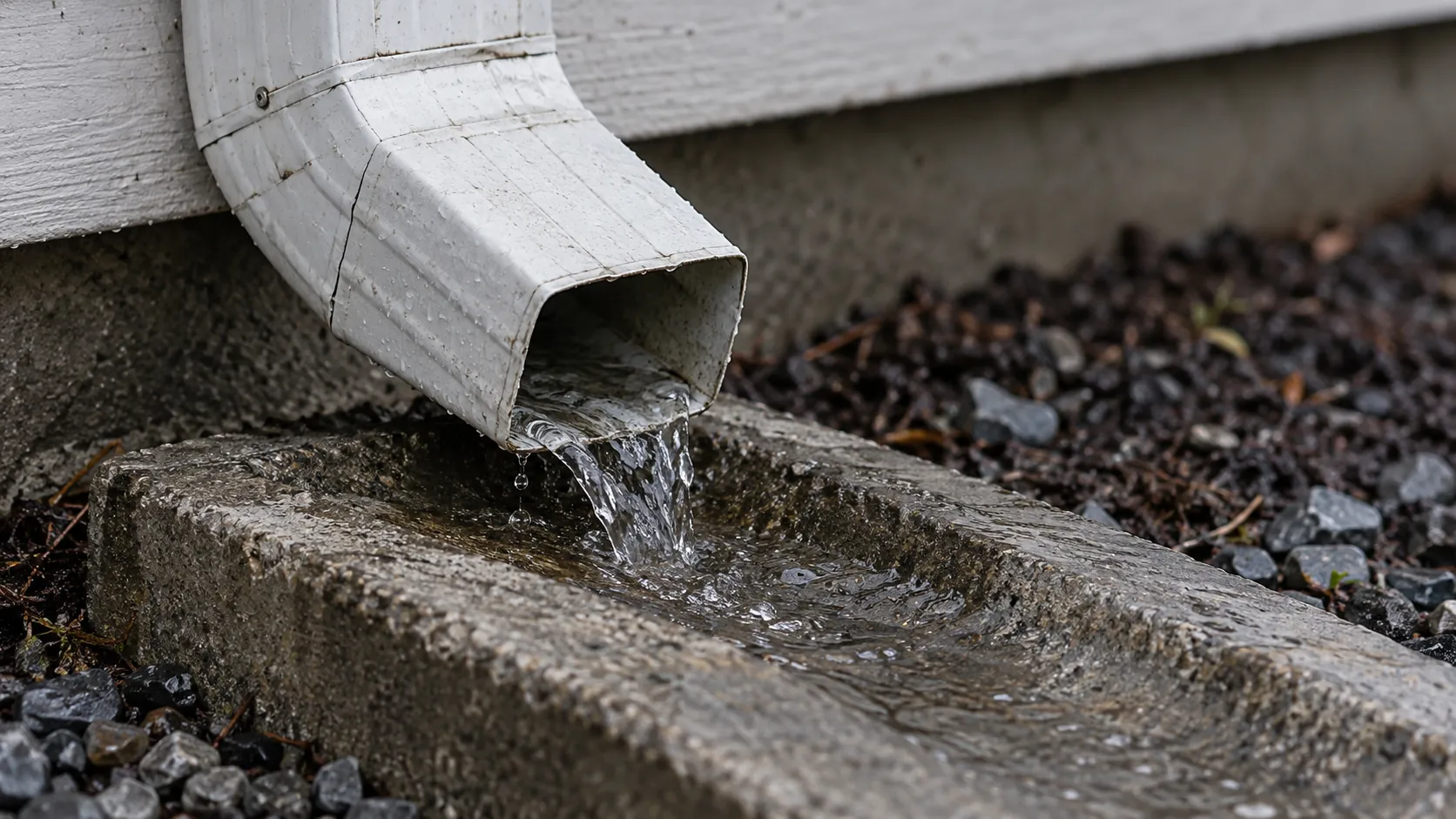
Include the visible outlet
Mention whether the downspout ends above ground, connects to an extension, or disappears into a buried pipe. Show the visible connection if it can be photographed from a safe position. These details clarify the boundary between an accessible gutter-cleaning check and a separate concern involving concealed drainage.
Understand the boundary of a flow check.
The agreed gutter-cleaning scope may include checks at accessible downspout entries or outlets. It does not automatically include dismantling a system, tracing hidden pipework, repairing joints, or clearing underground drains. Ask which points will be checked and how concerns will be reported. If the outlet disappears into the ground, include that detail before the quote is confirmed. Clear boundaries help you understand what a cleaning visit can establish and what may remain uncertain until a different type of inspection or repair is arranged.
Keep a useful note after the visit
Record which accessible points were checked and any concerns reported after cleaning. If a problem continues, describe the same location again and explain what changed or stayed the same. That history supports a more focused follow-up than simply requesting another general clean without identifying the unresolved concern.